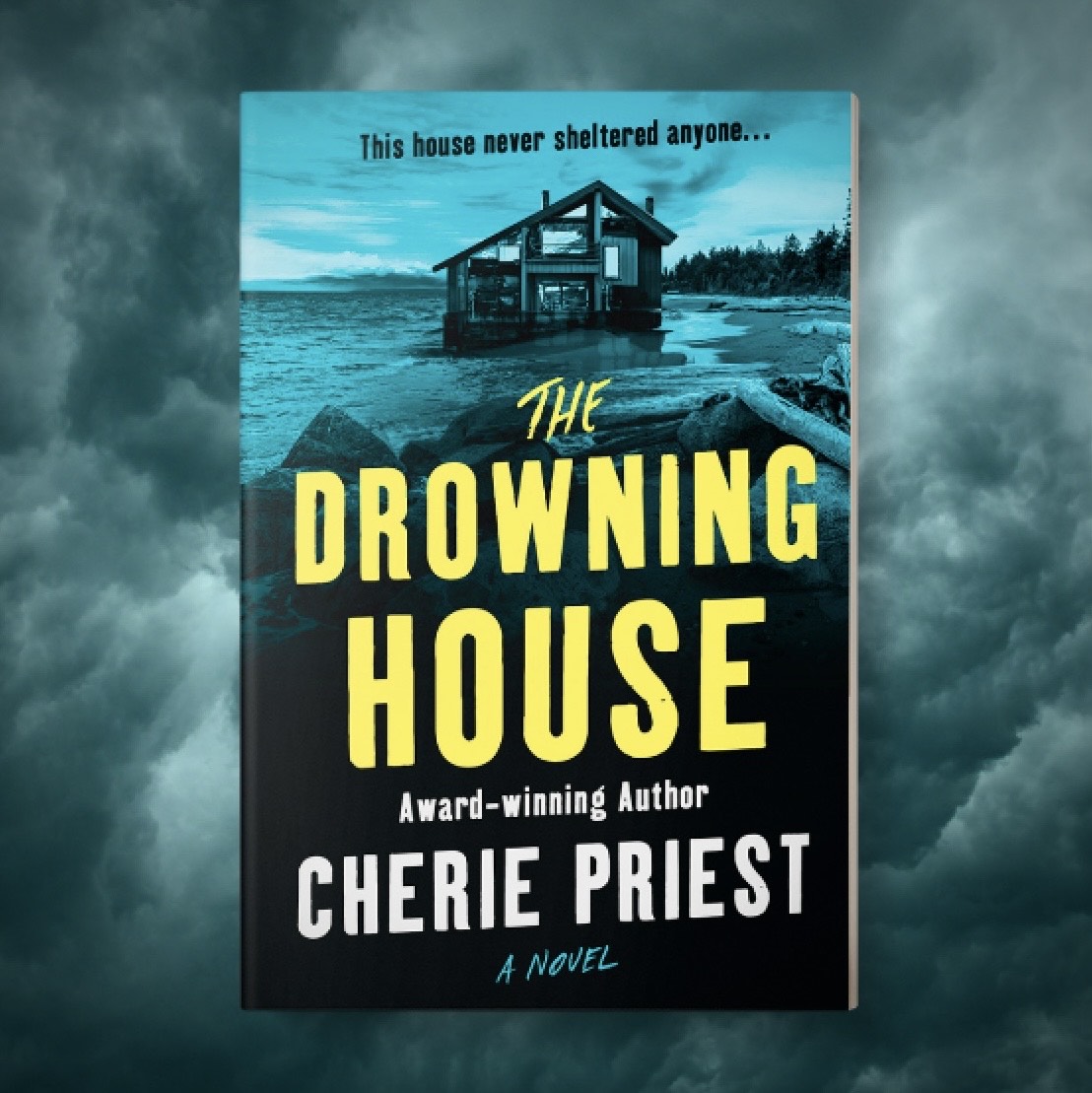

Time supposedly heals all wounds, but in Cherie Priest’s The Drowning House, the passing of time and a particularly dark and stormy night may prove that not only are some injuries too deeply embedded to go quietly, but also that home is not always where the heart is. Many thanks to Sourcebooks Landmark and Poisoned Pen Press for the advanced copy to review.

For anyone who has visited Washington State, it’s no surprise that the inciting action of The Drowning House is adverse weather. What is surprising, though, are the events and revelations that follow. A decayed, rotting mess of a house returns to Marrowstone Island’s shore, although “house” may be a generous term; from the beginning, readers are told point-blank that Tidebury House was never one to provide shelter from a storm. So, when Simon Culpepper soon vanishes without a trace, the mystery house is the least of his estranged childhood friends’ worries―that is, until all signs indicate that its origins and his fate may not be so unconnected or coincidental at all.
Priest, the author of works such as Four and Twenty Blackbirds and Grave Reservations, is known for testing the waters when it comes to spookier subjects. This time, she also delves into the complexities of time and the havoc it can wreak on a friendship. Thanks to bone-deep grudges and a classic rivalry, it’s hard to tell whether Melissa and Leo were ever really friends, or maybe frenemies at best. But, to their credit, they do come through in the clutch and band together for Simon’s sake. The result is a contentious push-and-pull that underscores the overarching plot in a way that will satisfy those who enjoy a good enemies-to-something-else trope. Their flaws and even the occasional bout of pettiness add just enough levity and normal drama to a tale rife with tension and darkness, giving the audience minute distractions from what lurks at the core of the narrative.
As both a reader and a writer, I was drawn to Priest’s overall style and flow as much as I was to the story itself. The Drowning House rides in on a gentle wave despite the turbulent situation that is actually being depicted on the page; that wave doesn’t retreat, though. It crests over and over again, and just when readers will think it’s going to finally pound the sand with everything it’s got, it’ll surely drag them under with another unexpected, sinister twist. It represents the epitome of ebb and flow in literary fiction, and the author is a master at infusing pretty words and poetic exposition with grim connotations and grisly anticipation.
Atmospheric and chilling, eerie and heartfelt: for those who love a good thriller and are curious enough to dip their toes into the shallower end of the horror genre, The Drowning House is definitely one new title to add to your summer TBR list.
 K. Watkins